
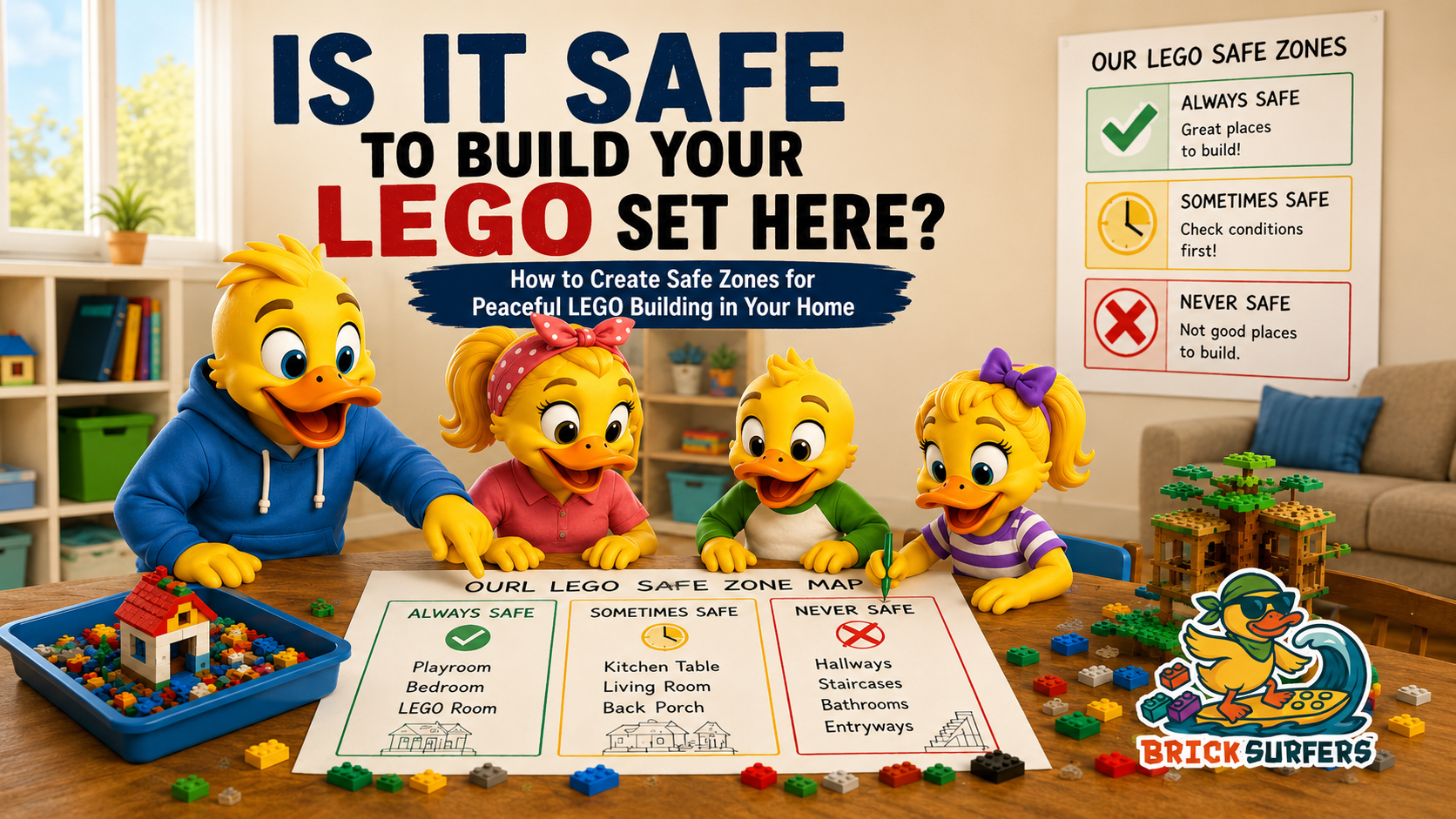
One of the biggest sources of frustration around LEGO building isn’t actually the LEGO bricks.
It’s not the mess.
It’s not even stepping on a stray brick.
It’s uncertainty.
One child starts building on the kitchen table. Dad needs the table for dinner. Someone asks them to move their project. A few pieces get lost in the process, feelings get hurt, and suddenly everyone is frustrated.
Sound familiar?
The problem usually isn’t that kids are building with LEGO bricks. The problem is that no one has clearly talked about where building is okay. When expectations aren’t clear, every unfinished project becomes a new negotiation.
That’s why one of the principles of the SURF Method is Unlock the Safe Zones.
Every Family Is Different
There isn’t one “correct” list of places where LEGO should or shouldn’t be built.
Every family has a different home. Different routines. Different pets. Different siblings. Different schedules.
The goal isn’t to create the perfect set of rules.
The goal is to create a shared understanding.
When everyone knows what the expectations are ahead of time, there are far fewer surprises—and far fewer arguments.
Turn It Into a Family Conversation
One of my favorite exercises is to gather the whole family together and make the decisions as a team.
You can do this when your child first starts collecting LEGO, once a year, or after birthdays and holidays when a lot of new sets have entered the house.
Start with a blank sheet of paper.
Ask your kids to help list every room or area in your home.
Once you have your list, work through each area together and decide which category it belongs in.
Always Safe
These are places where LEGO projects are always welcome.
Examples might include:
- A dedicated LEGO room
- A child’s bedroom
- A playroom
- A craft area
Projects can stay out without being in anyone’s way.
Sometimes Safe
These are areas where building is welcome—but only under certain conditions.
Examples might include:
- The kitchen table until dinner.
- The living room while everyone is watching a movie.
- The dining room on weekends.
- The back porch during nice weather.
This is also where your family’s “Surfboard” becomes incredibly helpful.
Whether it’s a shallow storage tub, a cafeteria tray, or even a large bedsheet, having the entire project on one movable surface means an unfinished build can be relocated in seconds without taking it apart or scattering pieces everywhere.
Never Safe
Some places simply aren’t good building locations.
Examples might include:
- Hallways
- Staircases
- Bathrooms
- Entryways
- Anywhere people regularly walk
As you go through each area, don’t just decide the answer.
Ask why.
Children are much more likely to respect a rule when they understand the reason behind it. Maybe the hallway is unsafe because someone could trip. Maybe the kitchen counter isn’t a good place because food is prepared there. Maybe the front entry needs to stay clear for guests.
Those conversations often matter more than the final list itself.
Put Your Agreement Somewhere Everyone Can See
Once you’ve finished, write up your family’s Safe Zone map and post it somewhere visible.
That way, when someone asks, “Can I build here?” the answer doesn’t have to depend on who’s home or what mood they’re in.
The family has already decided together.
Better Communication, Fewer Battles
Families work best when expectations are clear before there’s a problem.
A simple conversation today can prevent dozens of “I didn’t know!” moments later.
Your Safe Zone map won’t eliminate every disagreement, but it gives everyone the same playbook. Instead of arguing about where LEGO belongs, you can spend more time doing what everyone wanted in the first place—building together.
Inside the SURF course, I include a printable Safe Zones worksheet that walks families through this conversation step by step. If you’re ready to create your own family’s Safe Zone map, it’s a great activity to complete together.