
One thing my wife and I learned as parents of four kids is that every child is different—and every combination of kids is different, too.
There was a period when our four seemed to divide naturally into two sets of best friends. At other times, who got along best seemed to depend on the day of the week and the weather. Now that they’re older and aren’t all living at home anymore, it’s fun to watch what happens when all six of us are together again. These days, they often seem like they’re all best friends.
Over the years, we watched those same dynamics play out in the way they played.
Sometimes one of our kids wanted to build LEGO sets completely alone. Sometimes they wanted a particular sibling beside them—but maybe not another one. Some friends who came over were great building partners. Others weren’t interested in building at all. And sometimes two kids who got along wonderfully doing one activity didn’t necessarily build well together.
It was always interesting—and instructive—to watch.
Because building with someone else requires a different set of skills than building alone. You have to share pieces and space. You have to communicate your ideas. You have to listen to someone else’s ideas. Sometimes you have to compromise when their vision for the spaceship, castle, or city doesn’t look anything like yours.
And building alone has value, too. A child gets to follow an idea wherever it leads, solve problems independently, and create without having to negotiate every decision.
So I’m curious:
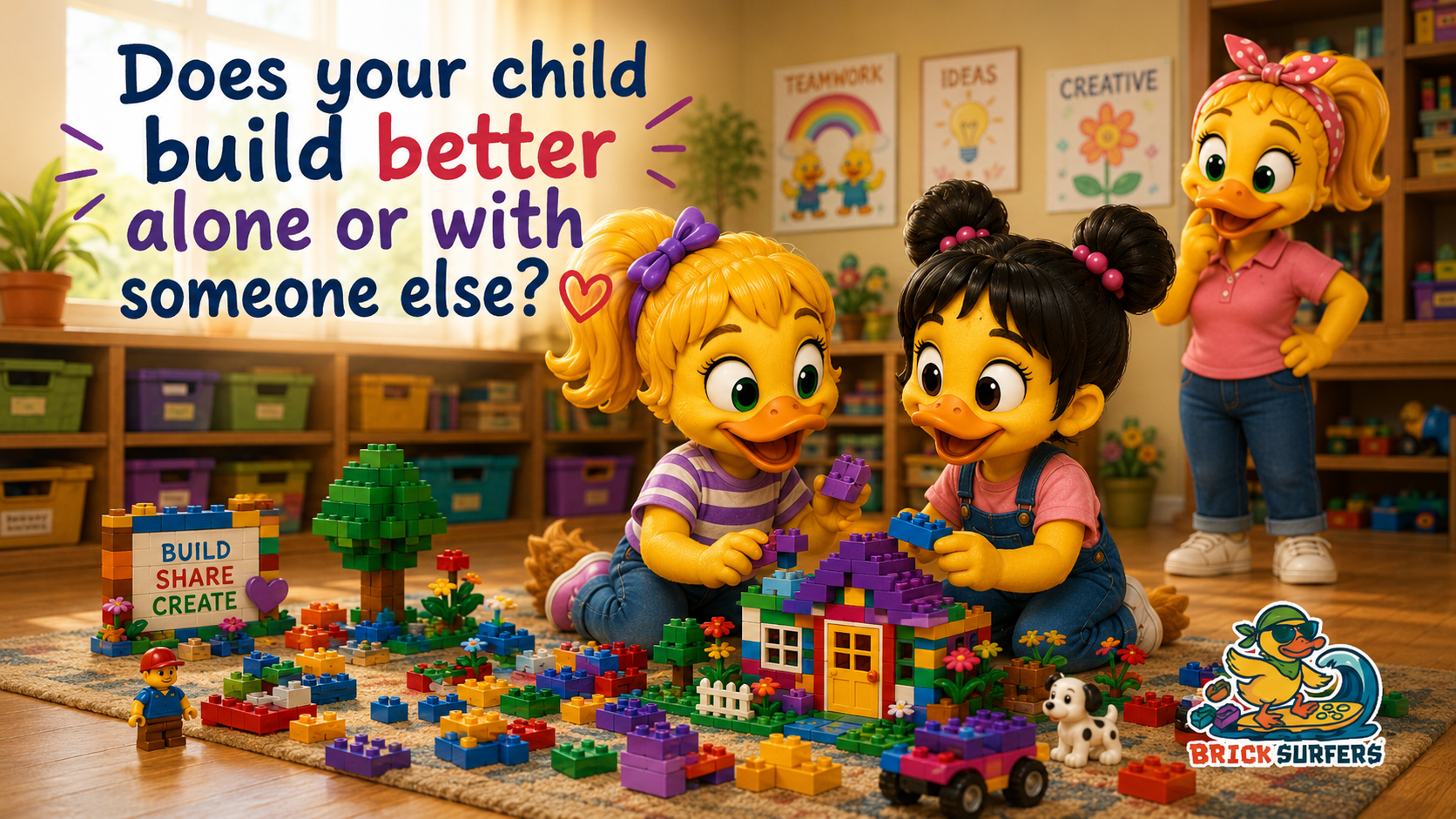
Does your child build better alone or with someone else?
And if they prefer building with someone, does it matter who that person is? A particular sibling? Mom or Dad? One specific friend? Do they build wonderfully with some friends and clash with others?
There’s a lot we can learn simply by watching how our kids play. And those different kinds of play give us opportunities to help them learn how to create independently—and how to create alongside someone else.