
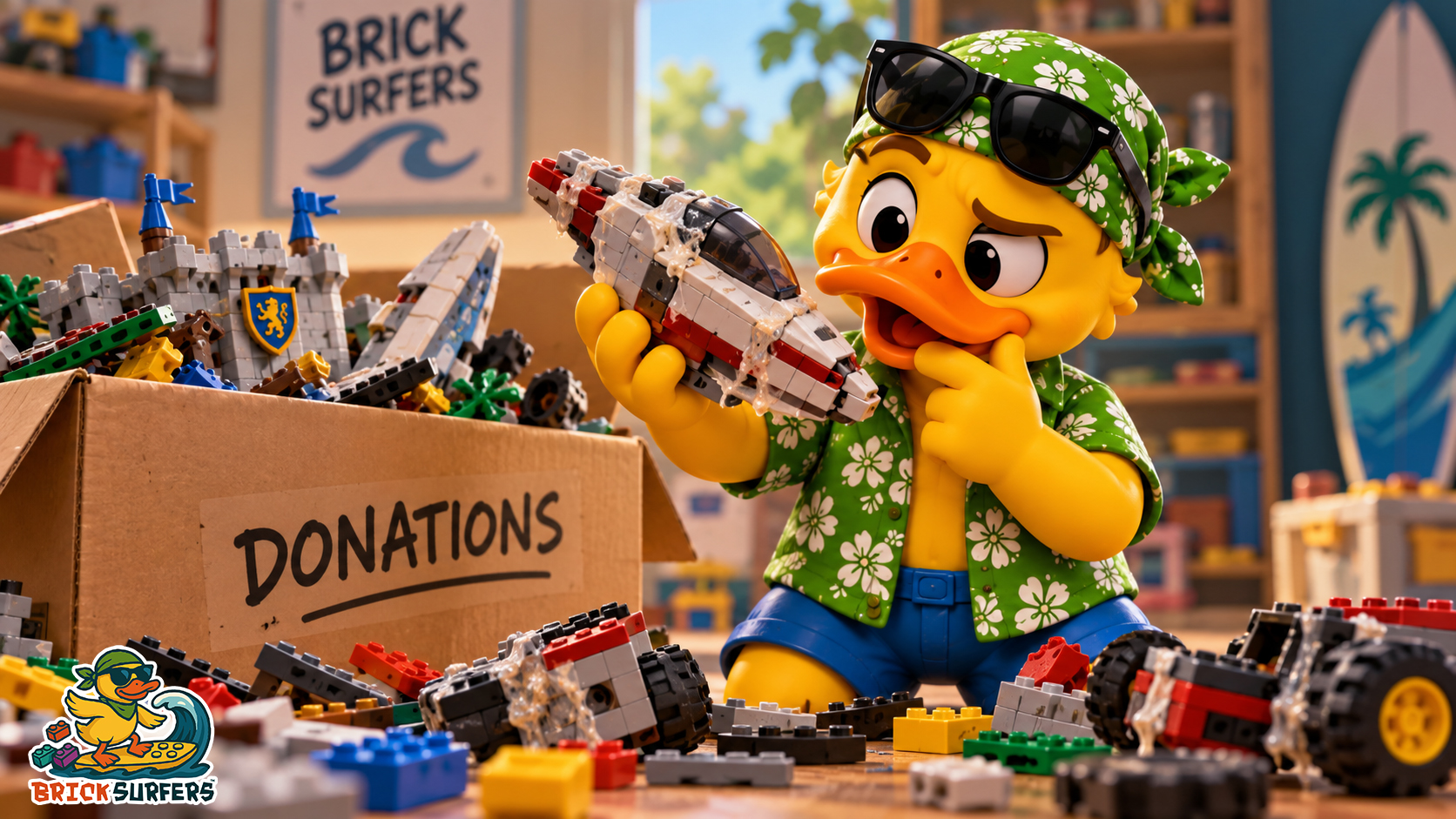
Several years ago, I received a donation from a family that was getting rid of their LEGO collection. They said that their kids had “outgrown” it.
As I sorted through the box, I noticed something unusual.
Several of the sets had been glued together. Not something easy to wash off like Elmer’s glue — I’m talking crazy glue — this was permanent!
At first, I thought it was strange. LEGO pieces are designed to come apart and go back together again. That’s part of the magic.
But the more I thought about it, the more I realized the glue was a solution attempting to solve the wrong problem.
The kids had been getting frustrated because their creations kept falling apart during play. And it frustrated the parents to feel like they had to keep rebuilding the sets for the kids. So the parents found a way to make the models sturdier.
Unfortunately, that “solution” created more problems.
Once the pieces were glued together, it became harder to modify the sets, rebuild them, or use the parts for new creations. Some models eventually broke anyway, but with the pieces glued together, the plastic was cracked and became even harder to use in play.
And then, rather than actually solving the original problem, the parents had concluded that their kids had “outgrown LEGO”, and then donated them to our education center.
I’m not convinced the kids had really outgrown the LEGO sets — I suspect the real issue was that the building experience wasn’t matching where the kids were developmentally.
Over the years, I’ve met plenty of parents who purchased sets above the recommended age range because their child was an advanced builder. And often, they can.
But building a set and playing with a set are two different skills.
A child might be able to follow the instructions for a complex model yet still become frustrated when that same model starts shedding pieces during imaginative play.
If I could go back and give that family advice, it wouldn’t be “don’t use glue.”
It would be:
Choose sets that match not only your child’s ability to build them, but also their ability to enjoy them afterward.
Ensuring creative replay is at least as important as whether they can build it in the first place.
Have you ever had a child become frustrated with a LEGO set because it was too fragile, too complicated, or just wasn’t a good fit for the way they wanted to play?