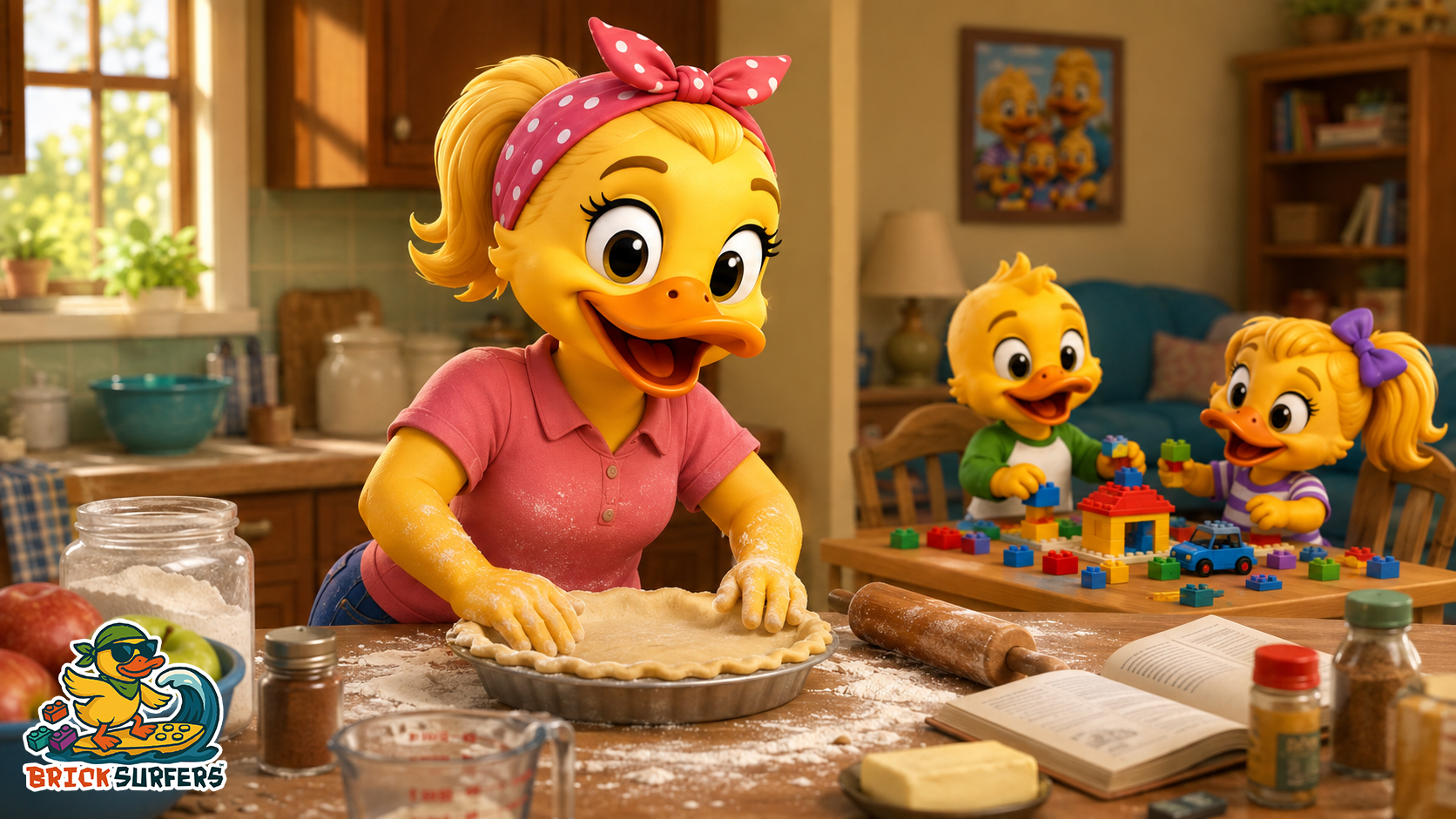
Have you ever baked a pie from scratch?
You pull out the flour, shortening, a pinch of salt, and a little water to make the crust. Then there’s the filling—maybe apples, sugar, cinnamon, and spices. Maybe it’s pumpkin. Maybe it’s chocolate pudding and whipped topping for a mousse pie.
Now imagine someone walks into the kitchen halfway through.
All they see is flour on the countertop, measuring cups in the sink, spice jars sitting open, and ingredients spread across every available surface. The recipe book is lying open, and the oven has just beeped to let you know it’s finished preheating.
To them, it looks like chaos.
But you know something they don’t.
You’re halfway through making a pie.
A few minutes later, the pie goes into the oven. While it bakes, the spice jars go back into the cabinet. The dirty dishes go into the sink or dishwasher. The counters get wiped down.
By the time the pie comes out of the oven, the kitchen looks almost exactly like it did before you started.
You had a process.
And at the end of the process, you had a pie.
For a little while, you had a mess.
But the mess wasn’t the enemy—it was simply part of the process.
Of course, it would be a different story if you left the flour, bowls, measuring cups, and dirty dishes sitting on the counter for days, getting in the way of dinner, homework, and everyday life. That’s no longer part of the baking process. That’s simply a project that never got finished.
The same thing happens when someone remodels a basement. For weeks there might be lumber stacked against the walls, tools sitting on the floor, and drywall dust everywhere. The room doesn’t look finished because…it isn’t. The mess is evidence that work is still happening.
When your child is building with LEGO pieces, it’s much the same.
What you see scattered across the floor isn’t just plastic bricks. You’re looking at ideas that haven’t been finished yet. That spaceship, castle, dragon, or treehouse still exists mostly in your child’s imagination. The pile of bricks is simply the raw material they’re using to bring those ideas to life.
Sometimes that creative mess only lasts an afternoon. Other times, if it’s in a room that isn’t being used for something else, it may be perfectly reasonable to leave it out overnight so they can continue building tomorrow.
The goal isn’t to eliminate every mess the moment it appears.
The goal is to understand what stage of the process you’re looking at.
That’s also why it’s important to teach children that every creative process has two parts: creating and restoring. Builders get to spread out their pieces, experiment with ideas, and enjoy the freedom to create. But when the project is finished—or when it’s time to share the space with the rest of the family—they also learn to put things away and prepare for the next adventure.
The real product isn’t just the LEGO model.
In fact, for most kids, today’s amazing creation will become tomorrow’s pile of bricks, ready to become something completely different.
The lasting products are much more important.
They’re learning to follow instructions.
They’re learning to solve problems.
They’re learning creativity.
They’re learning perseverance.
They’re learning to take pride in their work.
And they’re learning responsibility by cleaning up when the project is complete.
When we remember what is actually being built, the scattered bricks start to look a little different.
Creativity almost always looks messy in the middle.
Don’t judge the process by the middle.
Judge it by who your child is becoming because they were given the chance to build.
The pile of LEGO bricks on the floor isn’t always evidence that something has gone wrong.
Sometimes it’s evidence that something wonderful is still being built.