
You’ve seen the pictures.
The perfect LEGO room.
There’s a tidy building table in front of a wall of perfectly labeled drawers, with every brick sorted by part type and color. Finished creations are displayed neatly on shelves. There’s plenty of room to build, plenty of room to store everything, and somehow there isn’t a single stray LEGO piece waiting to attack someone’s bare foot.
Sometimes it’s not even a dedicated LEGO room. It’s just a picture of a child’s bedroom where everything appears to be exactly where it belongs.
For those of us whose homes will never grace the cover of a magazine—and who are sometimes happy just to make it through the day without tripping over a forgotten toy in the hallway—pictures like these can create a strange impression:
Apparently everybody else has figured this out.
But most of the other parents you know are, well…human.
They have good days and bad days. And generally, it’s the good-day pictures that make it onto social media.
We’re comparing someone else’s carefully selected moment with the full, unedited version of our own lives.
Meanwhile, back at your house, you’ve purchased 42 LEGO sets over the past three years and suddenly realize there are LEGO pieces spread across six different containers in four different rooms.
Wait. Make that five rooms.
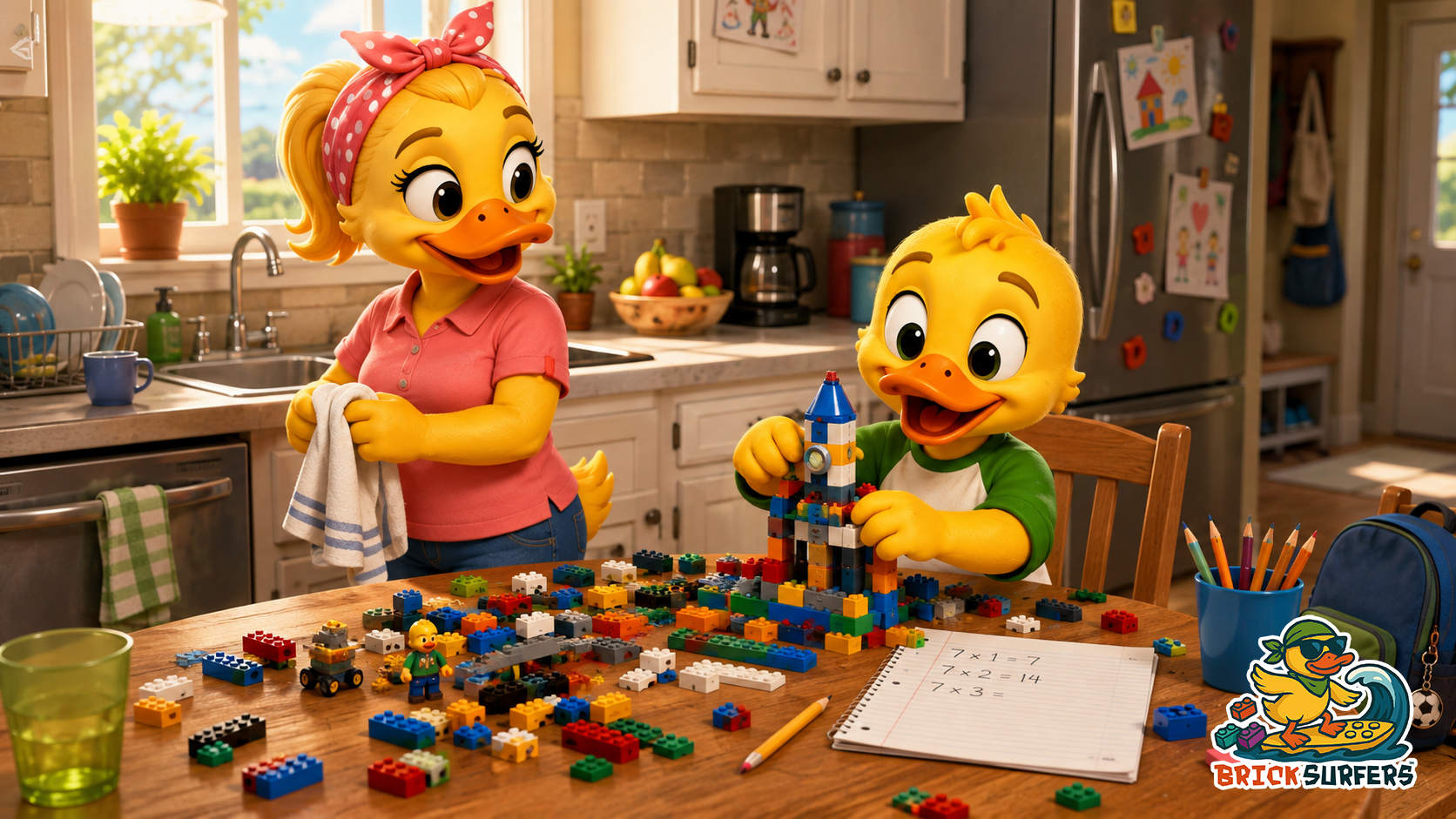
One of the kids stopped doing math homework while your back was turned and started working on the latest LEGO creation at the dinner table.
The dishes are done.
The homework isn’t.
And now the math worksheet and LEGO bricks have formed some sort of uneasy alliance across half the table.
You’re about to remind the kids that they’re supposed to build LEGO in their bedroom.
Except…sometimes you let them build in the living room.
And there’s that diorama developing in the finished room downstairs.
And actually, none of that is the problem you need to solve right now, because somebody still needs to learn the seven times table.
Whatever happened to that train table you converted into a LEGO table, anyway?
Oh, right.
Someone tripped over it last weekend, the leg still needs to be repaired, and the kids have been building on the floor instead.
Although you’ve also been wondering whether they’re starting to outgrow that table…
Some days, figuring out the perfect place for LEGO building isn’t quite as simple as Pinterest makes it look.
And everybody has advice.
There’s the mom from school who told you what works at their house. The parent you met at the Scout meeting does something completely different. Your in-laws remember what they did when your spouse was growing up.
They’re probably all giving perfectly reasonable advice.
And none of it quite fits your family.
Because every home is different.
Every family is different.
Every LEGO collection is different.
And that’s okay.
What works beautifully for one family may be completely impractical for another. What works for your family today might not work a year from now.
Kids grow.
Collections grow.
Interests change.
Rooms get rearranged.
The LEGO table that was perfect for a six-year-old may be hopelessly small for a ten-year-old building an enormous spaceship.
That’s why, when I talk about LEGO building in the home, I try to distinguish between strategies and principles.
The strategies can change.
Maybe your kids build at the kitchen table. Maybe they have a dedicated LEGO table. Maybe there’s a corner of a bedroom, a playroom downstairs, or a building tray that travels around the house.
But some principles remain remarkably consistent.
Kids need opportunities to create.
Families need spaces that still function for everyday life.
Everyone needs to understand the expectations.
Boundaries and schedules need to be respected.
And whatever system you create needs room to grow and change along with your builders.
Because the perfect place for LEGO building isn’t really a particular table.
It isn’t a particular room.
It isn’t a wall of perfectly labeled drawers.
Sometimes the perfect place might even be the dinner table—as long as everybody understands that the LEGO bricks need to move when it’s time for dinner.
The perfect place is wherever your child has room to explore an idea.
It’s where creativity can happen without taking over the entire household.
It’s where families can build together.
It’s where expectations are understood, boundaries are respected, and kids have permission to try something, take it apart, and try again.
And sometimes?
It’s where a kid gets distracted from the seven times table because they suddenly figured out how to make that spaceship landing gear work.
The math homework still needs to get done.
But maybe the LEGO bricks aren’t the problem.
Maybe you’re already looking at the perfect place to build.