
We all reach this point as parents.
The kids have toys they don’t play with anymore. Clothes they’ve outgrown. A few games with missing pieces. Maybe even a chair that’s seen better days.
But what about the LEGO collection?
Unlike most toys, LEGO is different. Every brick made today still connects with bricks made decades ago. In theory, a LEGO collection could last a lifetime. So when the bins start overflowing or the sets disappear into the back of a closet, it can be surprisingly difficult to know what to do.
Is this still a collection?
Or has it quietly become clutter?
Every LEGO collection begins with joy.
Birthday presents. Christmas mornings. Saving allowance for that one special set. A favorite minifigure that went everywhere. Family building afternoons around the dining room table.
Those bricks hold more than plastic. They hold memories.
But memories alone don’t solve the practical problem of finding space for everything.
Over time, something often changes.
At first, the collection serves us. It inspires new adventures and imaginative stories. But if we’re not careful, there comes a point where the collection begins serving us less, and we begin serving it more. We spend more time stepping over bins, searching for missing pieces, or moving boxes from room to room. Or worse … spending more time wondering where to put everything than actually enjoying the building.
That’s usually the moment parents start asking whether the collection has become clutter.
I don’t think clutter is defined by how much you own.
I think clutter is what happens when the things we own stop adding value to our daily lives.
A thousand well-organized LEGO bricks that your child builds with every week aren’t clutter.
A single overflowing Giant Bin of Doom that nobody wants to dig through anymore might be, though.
Not because the LEGO pieces have lost their value, but because the joy has become buried underneath the frustration.
That’s why my first recommendation usually isn’t to get rid of the LEGO collection.
It’s actually to see if you can bring back the joy.
Sometimes the problem isn’t that your child has outgrown LEGO. It’s that they’ve outgrown the way it’s organized.
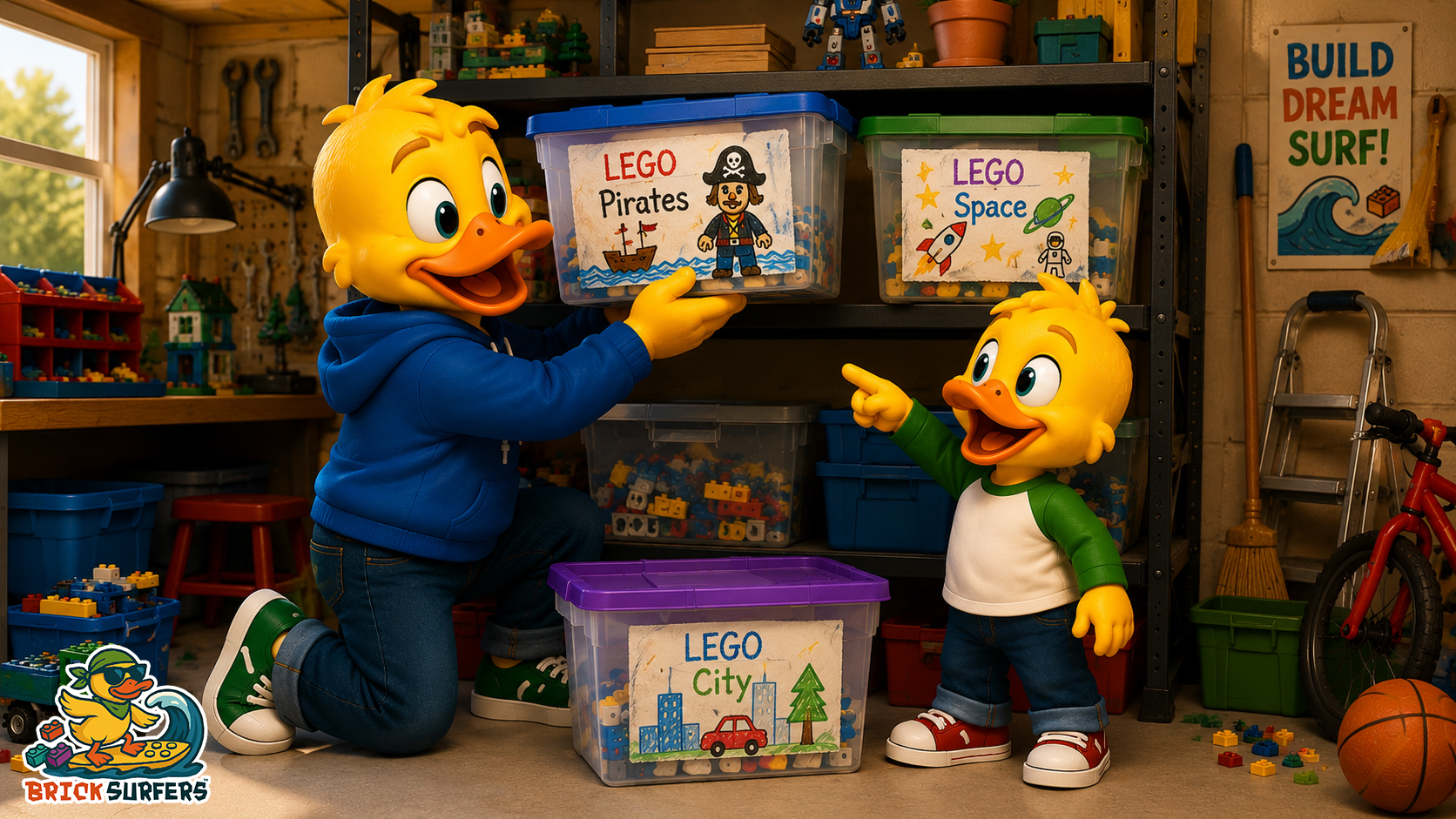
Separate the instruction books into their own box. Pull out the oversized pieces. Give minifigures their own home. Set aside favorite “go-to” parts. Make it easier to find the pieces that inspire building instead of forcing every creative idea to begin with thirty minutes of digging through one giant bin.
Sometimes a little organization is all it takes to make an old collection feel brand new again.
If that doesn’t seem to be the issue, try something else before making a permanent decision.
Rotate part of the collection.
You don’t have to pack away everything. Maybe store one theme or one box for a few months while keeping another one available. Maybe put away the bulk bricks while leaving all of their favorite minifigures out. When those stored bins come back later, they often feel fresh and exciting again.
And if your child doesn’t ask about the stored LEGO for months?
That’s valuable information too.
Eventually, every family reaches the practical side of the conversation.
How much space do we have?
Are there younger siblings who might enjoy these bricks next?
Would we like to save some of the collection for future grandchildren someday?
Or would these sets bring more joy if another family had the chance to build them?
There isn’t one right answer.
Every family’s home, budget, storage space, and priorities are different.
But I don’t think the goal should be keeping every brick forever.
Nor is the goal simply owning less.
The goal is making room to enjoy what you already own.
The goal is preserving the joy those bricks were meant to create.
Sometimes that means organizing a collection so it’s fun to build with again.
Sometimes it means rotating part of it into storage for another season.
Sometimes it means choosing a few favorite sets or treasured minifigures while letting the rest begin a new adventure with someone else.
A collection becomes clutter not when it grows too large, but when it stops serving the people who own it.
So before asking, “Is this clutter?”
Maybe ask a different question instead:
“Is this collection still helping our family build memories?”
That answer will usually tell you what to do next.